Restoration
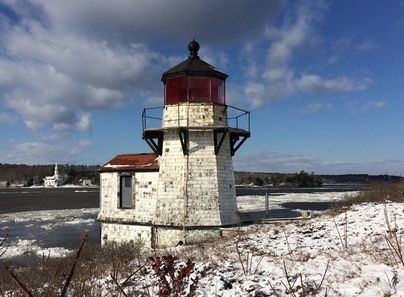
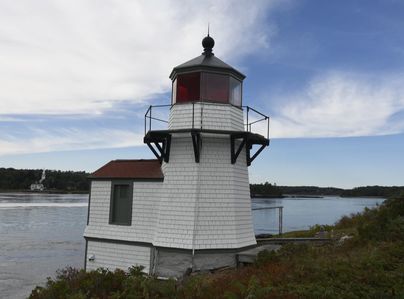
During the initial two years of The Chewonki Foundation’s fifteen year license of Squirrel Point, our first order of business has been to ensure that its historic buildings are weather tight and protected from further deterioration, clean up accumulated trash both inside and outside, and tackle considerable overgrowth of the grounds. We have removed unsafe decking and posted trail signs from the end of Bald Head Road to the light. In the summer of 2009 a group from City Youth (sponsored by the Nature Conservancy) constructed much needed bog bridging along the trail, and Bowdoin student volunteers helped with further clean up during Common Good day in the fall.
Exterior work to be done includes removal of vinyl siding and repair of original shingling, painting, and perhaps re-roofing, as well as ongoing grounds maintenance.
Although the light, in its splendid site, maintains much of its original character, changes made to the interior of the keeper’s house by Squirrel Point Associates removed many original features and were not in compliance with Historic Preservation standards. Those alterations will need to be reversed.
We were very fortunate during the summer of 2008 to be the beneficiaries of Bowdoin College’s Rusack Coastal Studies Fellowship program, which sponsored Annie Hancock ’10 as our summer intern under the guidance of Wiebke Theodore, a Bowdoin Assistant Professor of architecture and CSP Director. Annie inventoried and fully documented the current condition of Squirrel Point’s structures, collated original architectural plans, gathered Squirrel Point history, interviewed various constituencies interested in the light, compared Squirrel Point to its sister lights at Doubling Point and The River Range Lights, built a topographical site model, and developed a full set of restoration plans for the keeper’s house.
The restoration plans fulfill multiple needs: Chewonki’s intended uses of the property for educational and nature programming; public access; and the requirements of historic preservation. This work provides an excellent roadmap for the future.
Restoration plans would restore the interior of the keeper’s house to its original features and configuration, as well as take advantage of environmentally-sensitive technologies to potentially enable occupancy by a seasonal caretaker and facilitate use of the site for educational purposes and special events. In addition, Annie proposed opening up the southern porch to provide some outdoor shelter for visitors, to make it visually consistent with the west porch, and to create a more welcoming entrance from the trail.
We have created a small museum area on the ground floor of the keeper’s house, which now displays these restoration proposals.